

eCOA and IRT Technology for the Realities of Cancer Research.
Oncology clinical trials demand far more than standard clinical trial technology. Variable treatment cycles, complex randomization schemes, frequent protocol amendments, rapid symptom fluctuation, and long study durations require eCOA and IRT systems that adapt with trial needs.
YPrime empowers global oncology programs with eCOA, IRT, and eConsent designed specifically for the operational and regulatory complexity of cancer research, driving data quality, participant compliance, supply continuity, and inspection readiness.
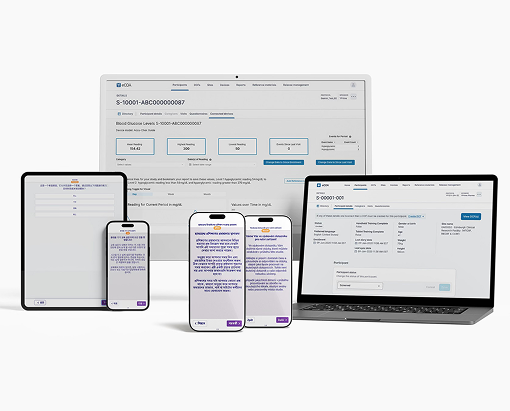

Why Oncology Trials Require Specialized Clinical Trial Technology.
Cancer trials rarely follow predictable, calendar-based workflows. Chemotherapy cycles, immunotherapy dosing, radiation schedules, cohort expansion, and disease progression introduce variability that generic eCOA and IRT platforms struggle to accommodate.
Oncology-ready clinical trial technology must:

Technology Designed for the Oncology Participant Experience.
In oncology trials, patient burden directly impacts compliance and data quality. YPrime prioritizes participant-centered design across eCOA workflows while ensuring IRT-driven visit schedules and treatment assignments remain aligned with real-world clinical care. The result is higher compliance, fewer missed assessments, and reliable data over long study durations.

Proven in Global Oncology Studies
YPrime supports oncology clinical trials across cancer types and disease states, reflecting the real-world diversity and complexity of oncology research. Experience spans solid tumors, hematologic malignancies, and supportive-care studies commonly embedded within oncology programs.
In one global Phase 3 multiple myeloma study spanning more than 120 sites in 25 countries with over 30 languages, YPrime delivered a fully configured eCOA solution supporting industry-standard oncology instruments including PRO-CTCAE, EQ-5D-5L, PGIS, and EORTC QLQ-C30.
Despite frequent protocol changes and a projected multi-year duration, the study maintained high compliance and consistent data quality, demonstrating the value of flexible, oncology-specific eCOA designed to adapt without disrupting trial execution.

Enabling Sites, Sponsors, and CROs Across Complex Global Programs.
Oncology trials place significant operational pressure on sites and study teams. YPrime eCOA and IRT supports real-time oversight across both participant data collection and trial logistics, enabling:
Integration-Ready for Data-Rich Oncology Trials
Oncology studies increasingly combine subjective outcomes with objective data from connected devices and digital health technologies. Activity trackers can monitor daily function and treatment tolerance, while specialized sensors may capture disease- or treatment-specific metrics correlating with clinical outcomes. YPrime’s eCOA integrates seamlessly with connected devices, extending trial reach beyond traditional clinical settings.



Ready to Support Your Oncology Program
Whether you are planning an early-phase study or managing a global Phase 3 oncology program, YPrime brings industry-leading eCOA, eConsent, and IRT technology, operational oversight, and oncology expertise needed to execute with certainty.
FAQs
Oncology trials often include complex protocols with multiple treatment arms, variable treatment cycles, and patient status that can change quickly. A specialized eCOA platform helps ensure assessments stay aligned to clinical reality while maintaining data integrity, operational agility, and consistent data capture throughout the study. Learn more about the Yprime Oncology eCOA Platform.
Oncology introduces a number of challenges including: treatment cycle complexity (e.g., chemotherapy cycles, immunotherapy schedules, radiation breaks), frequent protocol amendments that can disrupt established schedules, and rapid symptom fluctuation between visits. These factors can create data gaps if the technology relies on rigid, calendar-based workflows.
Look for flexible scheduling that can align to treatment cycles and toxicity windows, accommodate delays or cycle shifts, and adapt as participants’ status changes. This helps reduce missed assessments and supports more consistent, higher-quality longitudinal data.
Oncology protocols often evolve mid-study. An eCOA platform should enable changes without disrupting historical data, requiring burdensome remapping, or compromising comparability—so amendments can be implemented efficiently while protecting data quality.
Key features include conditional and branching logic to reduce burden, BYOD and provisioned device options, and configurable reminders that accommodate fluctuating health status and variable schedules. These capabilities support compliance and participant experience in demanding treatment periods.