
IRT Design Playbook
The Biotech Sponsor’s Playbook for IRT Success
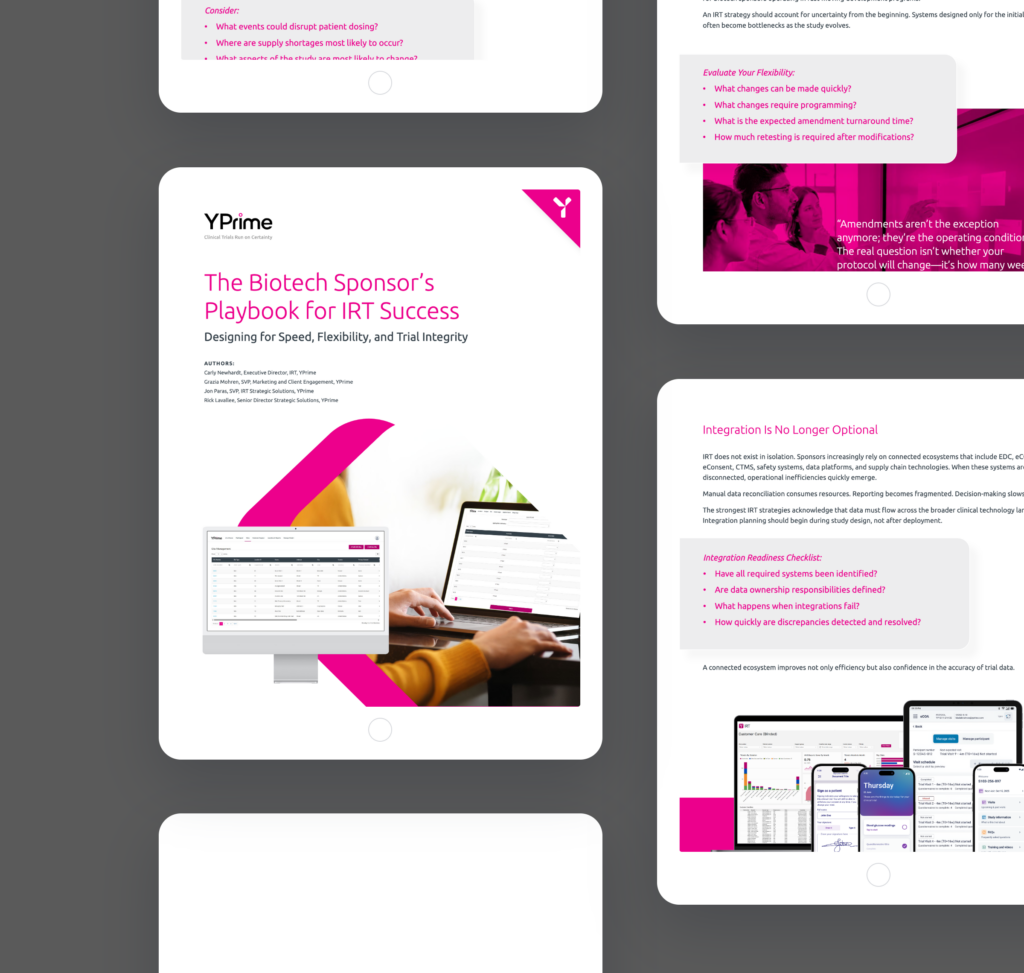
Most biotech companies implement IRT only a handful of times across the organization’s lifecycle. Unlike large pharmaceutical companies with dedicated RTSM and supply specialists, emerging and mid-sized sponsors manage study startup, supply planning, enrollment oversight, and vendor selection with lean teams and limited internal IRT expertise.
That makes early design decisions carry weight out of proportion to the time usually given to them. A poorly designed system creates delays, introduces unnecessary complexity, increases drug waste, and makes protocol amendments difficult to implement. A well-designed system becomes invisible, letting sites, patients, and study teams focus on the trial rather than the technology supporting it.
The pattern is consistent enough to plan around. The costliest IRT issues rarely appear during development. They surface during user acceptance testing or after study launch, and they trace back to assumptions made during requirements gathering that were never challenged.
The most successful sponsors do not treat IRT as a randomization tool. They treat it as trial infrastructure that protects trial integrity, manages investigational product, and provides operational visibility throughout the study.
This playbook covers the questions to ask before committing to a system, and what to look for in the team behind it.
Read it here.
What’s in the Playbook
Sponsors evaluate randomization. Supply management is where the budget is usually won or lost.


A practical guide for biotech sponsors navigating IRT design, clinical supply management, and vendor selection — covering the decisions that protect your trial budget and timeline.
– Carly Newhardt, Executive Director, IRT, YPrime
IRT FAQs
IRT (Interactive Response Technology) is the system that manages randomization, treatment assignment, and investigational product supply across a clinical trial. It controls which participants receive which treatment, tracks kit inventory at sites and depots, triggers resupply shipments, and maintains the blind.
There is no functional difference. RTSM (Randomization and Trial Supply Management) names the two things the system does. IRT describes how users interact with it. Vendors and sponsors use both terms for the same category of system.
IRT reduces waste by matching supply to actual enrollment rather than to forecast. Predictive resupply, expiry-aware inventory allocation, and country and depot strategy limit the number of kits that sit unused at low-enrolling sites or expire before use. For a sponsor with a single expensive investigational product, these controls have direct budget impact.
IRT design should begin during protocol development rather than after finalization. Many of the costliest IRT issues surface during user acceptance testing or after launch, and stem from requirements-gathering assumptions that were never challenged. Reviewing participant journeys, randomization workflows, and supply strategies before formal testing is where problems are cheapest to fix.
Amendments can require anything from a configuration change to full redevelopment, depending on how the system was built. Adding a cohort, changing a dosing schedule, and revising enrollment criteria each carry different turnaround times and retesting requirements. Sponsors should confirm during evaluation which change types are configurable and which require programming.
Three fundamentals matter over the life of a study: service, meaning whether the team is invested in the study’s success; execution, meaning whether they consistently deliver quality outcomes aligned with protocol requirements; and accountability, meaning how they respond when problems occur. Sponsors remain responsible for trial oversight even when activities are outsourced.